Wednesday, April 18, 2007

Generic chick


love struck , La’Brooy, Melanie

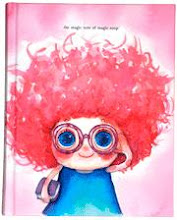
Chick lit always received a sideways glance of fluffy-content contempt from the acquisitionist. My disdain for candy-pink covers and frangipani bath bliss was unsettled when a friend convinced me to pick up Melanie La’Brooy’s love struck. Deliciously saccharine, the ‘busy’ cover belies the adroit humour and sassy intellect of the main character, Isabelle Beckett, and her romantic adventures.

Isabelle Beckett, as her namesake suggests, continues a tradition of chivalric romance, lusting for an ideal. Similarly, her best friends Fran and Zoe (think Salinger and the Glass legacy of intellectual ennui and analytical astuteness) are romantic wrecks. Combine 19th century romantic expectations with the cynicism of Salinger, and the reader is set for a trip of courtship chaos.

With a penchant for literary types, Isabelle is constantly disappointed. Musing on her ideal she wonders:

‘It’s odd what we’re attracted to, isn’t it? I mused. ‘I mean all a boy has to do to impress me is to be well-read or have stories to tell- and I mean proper stories – and I’ll instantly attribute all these wonderful qualities to him that don’t necessarily have anything to do with him. He could be a lying, cheating, tofu-eating freak for all that I know but I’ll fall for him just because he’s read Anna Karenina.

Defending this ideal, her singledom, her job at an art auction house, and her tutu-wearing tendencies becomes Isabelle’s challenge. Isabelle deals with the craziness of her life as she confronts Sydneysiders, taxi drivers, spiders, the world and importantly herself in order to regain control. If you are after something highly funny, pick up a copy of love struck but don’t be surprised if you embarrass yourself with snorts of laughter on your daily commute.

I am surprised at how preconceptions are dispelled, dismantled and left on the verge when I actually begin to read a book. Intimidating classics, like Eliot’s Mill On the Floss which I recently read for my Victorian lit course are surprisingly enjoyable. Has anyone else been pleasantly surprised when venturing outside of their typical material?

Friday, April 13, 2007

Meet the author


A woman attired in a flamboyant zebra-striped flowing top came up to the counter at work this evening. With directed zeal, she inquired whether we had Robert’s book Shantaram in stock. I replied with a “no”. She was the 5th customer who had asked me that question during the day. Only a few minutes later, a gentleman purchased a card. He asked me why we didn’t have his book in store. Indeed, it was the author himself. He seemed an interesting character, so I must check it out when it comes in.

Recently at uni we met Kim Scott, the author of Benang. Laborious but rewarding is how I would describe Benang. Enjoyment wasn’t easily derived from this fragmented novel about the ‘first white man born’. The novel, which transcends linear narrative and chronological time, is told from the perspective of Harley, a product of Aboriginal assimilation. Harley struggles to unearth the past and explore his Nyoongar heritage. The novel makes for particularly interesting reading due to the interspersion of material from historical archives. Factual moeties work to challenge the grain of ideological progress. Dealing with the “possibilities of place” this Miles Franklin winner is a challenging read, but interesting if you can suspend your reader expectations. Scott’s lecture – although abstract – was engaging and definitely helped me to appreciate the sense in which one should approach and interpret a novel so resistant to traditional narrative structure.

In the vein of ‘meet the author’ I thought I’d introduce you to a fantastic Queensland poet, Samuel Wagan Watson. I discovered him at Bookslam, the literary nightclub I attended earlier this year. Although many of his books are out of print, L and I ordered a copy of his anthology smoke encrypted whispers. His writing buzzes with urbane imagery. His poems draw on a thematic reservoir of restlessness, contemporary dreamtime, liaisons revisited, and foment of childhood wonder. Here is “white stucco dreaming”, one of the poems that Watson read aloud. If you get a chance to hear him read his work, go along, because his strong and passionate vocalization will shape the way you read his work.

White stucco dreaming

sprinkled in the happy dark of my mind
is early childhood and black humour
white stucco dreaming
and a black Labrador
an orange and blck panel-van
called the ‘black banana’
with twenty blackfellas hanging out the back
blasting through the white stucco umbilical
of a working class tribe
front yards studded with old black tyres
that became mutant swans overnight
attacked with a cane knife and a bad white paint job

white stucco dreaming
and snakes that morphed into nylon hoses at the terror
of Mum’s scorn
snakes whose cool venom we sprayed onto the white stucco,
temporarily blushing it pink
amid an atmosphere of Satuday morning grass cuttings
and flirtatious melodies of ice-cream trucks
that echoed through little black minds
and sent the Labrador insane

chocolate hand prints like dreamtime fraud
laid across white stucco
and mud cakes on the camp stove
that just made Dad see black
no tree safe from treehouse sprawl
and the police cars that crawled up and down the back streets,
peering into out white stucco cocoon
wishing they were with us.

Friday, March 9, 2007

Random acts of Korean kindness


Aristotle’s Golden Mean delineates two extremes: stinginess and prodigality. Although prodigality can border on luxuriating waste, one can never exceed output of kindness. Bybee, being the beautiful and generous bibliophile that she is, introduced me to Korean literature in the form of Lee Kyun-Young’s prize-winning novel, The Other Side of Dark Remembrance, which traveled from South Korea to my letterbox. A slim volume which unfolds at an accelerated and frantic pace, I devoured it on the way to work and back!

The novel jolts to a start, in media res, as the protagonist jumps out of bed. Unsettled by the lack of normalcy in his surroundings he contemplates his usual routine. Everyday he relishes morning ritual; a conscious resistance of up-and-go dedication:

“He considered this darkness he enjoyed with his eyes closed during this blank waking hour a perfect ritual of peace for him. That’s why he made a point to relish this darkness during the morning hours when he was supposed to hurry, and eventually he would sometimes be late to the office or fail to keep an appointment’.


This sketches the weariness and drudgery of the life of a ‘metropolitan salaried man’ married to work and efficiency. Immediacy looms, with the urbanized world polarized between the demand for productivity within the public realm and the individual’s need for creative space. He has awoken to find himself in foreign surroundings. Memory swallowed up by one drink too many. Sense of place gone.

After his inebriation has dissipated, various people recount his uncharacteristic behaviour. Inexplicable is his excursion to Imun-dong, and the mysterious woman assisting him in his desire to go there. With self-cussing regret he discovers he has lost his satchel. The repossession of the satchel becomes his aim, as he seeks to find the contents integral to a lucrative company deal.

The novel ends with rumination upon the insignificance of social ascendancy and the importance of childhood as a formative experience. He vacillates between tenacity and an emotionally corrosive feeling of loss because of his orphaned past. I wish my reading was informed by Korean history though. There’s obviously a lot that my culturally ignorant self wouldn’t have noticed.

The title has multilayered resonance. A scene of literal awakening in the beginning introduces the protagonist's realization of the unusual events. The Other Side of Dark Remembrance plays on the idea of chiaroscuro, with light/dark oppositions used to explore his search for his satchel and solutions. His past as an orphaned child is examined as he comes to value the potential of human connections to overcome adversity and enrich human experience.

Wednesday, February 28, 2007

Recap

Jam-packed full of well-dressed bibliophiles, the literary nightclub wasn’t what we had expected. Patrick Neate hosted the event, introducing a series of readers like Sam Wagan-Watson (Aboriginal poet) and Anthony Swofford (Jarhead etc). In between, people were supposed to take advantage of the bar and mingle. There was an older crowd. At about 10pm, and mid-way through a live singer’s performance (how rude!) the people started to head home. L and I have ordered a copy of Watson’s book and I will post up some of his clever work soon.

Uni is back. Procrastination is the temptress once again. This semester I’m doing a Victorian Lit course, Ecotexts/Nature and Technology in Writing, an Education unit and a random history unit. In terms of new faces, I sat next to a girl in education, who asked me what indoctrination meant. She also admitted that she doesn’t want to be a teacher. Come again? Surely an arts degree, and then possibly a dip-ed on top would a better pathway if you couldn’t yet envisage yourself teaching.

Reading. Bumping along on the public transport system, I devoured a gorgeous little Korean novel sent my way by Bybee. It deserves its own pocket of cyberspace (a term coined in Gibson’s Neuromancer , so I learnt in Ecotexts). I will blog it tomorrow. Yes I will. This week I must finish All The Pretty Horses . Also, I’m going to sink myself into the acerbic Edwardian wit of Hector Hugo Munro.

Wednesday, February 21, 2007

Acquisitionist awakes

Irregularity is the key to a student’s sleeping patterns on holidays. The luxuriating laziness fostered in me has been shattered. Today, I awoke early for an education faculty welcome. The realities of classroom teaching were brought to our attention in our instructor’s anecdotes about a troublesome student.

One ringleader of a particular naughty bunch had brought the class into waves of giggles. He had put on a show of impersonating impertinence while she had left the class on an errand. Peering through the door, she caught the student trouncing the classroom, imitating her manner. Battling with the instinctual drive to yell at the student, she commanded him to stand up and stick out his hand. After shaking his hand and commending his dramatic ability, she asked him what else was in his repertoire. He imitated the deputy principal's peculiarities splendidly. Because of the offbeat manner in which she handled the situation, he began to improve his behaviour, pulling his cohort with him. As an aside, this little boy reminded me of the irreverent Trapp of Great Expectations fame.

We had a brief tour of the education building, which is off the main campus. It’s an intimate campus with a cosy library. We also have access to 24-hour computer labs, which are under safe surveillance. This ensures that students who find themselves homeless do not move in to the labs and drown their sorrows with bottle after bottle of gin. Well, that’s another story. So, the rest of the day is ahead of me. Tonight, I’m attending a literary nightclub- supposedly cocktails, funky tunes and bookish entertainment.

Thursday, February 15, 2007

Night out at the theatre------ The Lady Aoi by Mishima.


(Picture courtesy of The Sunday Times)


Yesterday evening, L and I enjoyed an exquisite dinner at an Indian restaurant, MM. The lamb dishes were delectable, and the pistachio ice-cream we finished off with was worth being late to the theatre for. We arrived just after 8pm to be told it had already started. Luckily, the show did not actually commence until 30 seconds after we were ushered to our seats.

Rather than crackling with passion as promised, The Lady Aoi fizzled with lacklustre dramatic tension. Playwright Mishima, who I adore for his fusion of the macabre with sensuality, endeavoured to explore the psychological and philosophical domain of dreams. Dialogue was sparse; the philosophical pretensions of the play superficially spread. The actors’ attempts to compensate with overblown performances did not improve the entertainment value. Aoi, hospitalized on her death-bed, is a live and tortured presence played by the convulsive embodiment of Claudia Alessi. Her pervasive pain links the past and present in the realms of memory. Rivaling the audience in her ability to sit silently through the hour-long performance, I sympathised with her plight. Somebody give the poor girl a blanket before she catches pneumonia.

Some small gripes deserve mention- unfortunately the acquisitionist is oh-so cantankerous for one so young. The voices of some of the actors were nauseatingly articulated, either as they tried to project or eschew their Australian accents. However, the costuming was meticulously crafted. Hikaru’s ornamental and oriental-style garb was eye-catching. The dark hooded figure of Madame Rokujo entering the hospital to visit Hikaru, her past lover, was also disarming. The triangular stage design provided a physical map of the love conflict that was to unfold. Special effects did give a scintillating edge to the drama at times.

The chemistry between Hikaru and Madame Rokujo was lacking. The play culminated in a foofaraw of action. Failing to command my attention earlier, all the fuss seemed to demand it. Unfortunately, the phone call revelation at the end which aims to shatter the illusory and real boundaries was about as hackneyed as the flashback boating-days scene. However, the final image of efficiency that the nurse presented was striking as she slowly scrubbed the bloodied stage clean.

Self left feeling hollow, the audience also did not appear to be enamoured with The Lady Aoi. A few snickers escaped at the ostentatiously ‘erotic’ moments in the play, and several old dears in the audience covered their ears as the loud music threatened to damage the tympanic membrane. Although not a memorable performance, I’m glad I went because I would’ve been disappointed not to have seen a Mishima offering. It was a visual feast with a nutrionally- deficient main course.

Thursday, February 8, 2007

Spring Snow


My introduction to Mishima came in the tautly composed The Sailor Who Fell From Grace with the Sea, a novel of nihilism and violence which unsettles the reader. On finishing the book of an evening, sleeplessness ensued. The bitterness of humanity glimpsed in the last pages left the stomach riddled with unease. Coming across Spring Snow in a bookstore I took it up to the counter, not knowing much about it. The young man at the counter had read it, and recommended it highly. Interestingly, he said it did not have the violent elements I expected. Violence is superseded by the piquancy of desire in the first book of the Sea of Fertility tetralogy.

Passion unfolds in a sensual frisson as the entanglement between aristocratic lovers Kiyoaki and Satoko engages the reader with its impossibility. Kiyoaki is a young man of delicate constitution. Spoilt by his family’s ascendancy and the misfortune of personal beauty he is characterized by capriciousness of feeling and action. His affection for Satoko paralyses him, and he treats her selfishly. Satoko, a beauty from an old and disempowered family receives advances of marriage from a royal suitor. Receiving no objection from Kiyoaki she pursues the elopement. Unfortunately, Kiyoaki’s lack of foresight lands the lovers in a compromising and doomed affair.

The novel left me with a desire to read more Mishima. Fortunately, I’m attending a Mishima play next week. I also plan to see a production of Pride and Prejudice. This week of theatre will be refreshing considering my lack of theatric entertainment of late.

Tuesday, February 6, 2007

Lackadaisical Lady


The last week has been one of reading paralysis. Like the inevitable dilemma of the ice-cream store, I have the problem of Too Much Choice. The days are dissolving as the university semester fast approaches. The lovely blogger Bybee has sent me a Korean delight, The Other Side of Dark Remembrance by Lee Kyun-Young. I look forward to dipping into the ‘mundane yet confused life of a metropolitan salaried man.’ I also *have* to read McCarthy’s All the Pretty Horses because someone gave it to me in my philosophy class last semester. And my bookish expectations tell me that I’ll be galloping through the rest of the Border trilogy after reading the first offering.

I’m reading Jay Rubin’s biography of Murakami entitled Haruki Murakami and the Music of Words. The title notes the musical metaphors that infuse Murakami’s works. Having a keen interest in music, Murakami managed a jazz bar, where he indulged his penchant for Western literature, reading voraciously when he could. The biography captures the banality of Murakami’s career changing moment of epiphany. Beer-in-hand at a baseball game, the sun shining down, he decided he could write a novel at the age of 29. Murakami’s upbeat novels reflect the tempo of modernity. Indeed Murakami’s plots have fluidity, taking different courses of action, in rifts and fugues of improvised drama. Murakami actively disliked Yukio Mishima (p15). It’s interesting that although Murakami highlights his desire to avoid the Japanese condition, his novels have nuances and ideas that aren’t inherent in Western literature. Notably in Norwegian Wood, there seems to be a consciousness of a debt for happiness, and the sense of death as a live and pervasive presence.

In regards to my reading regime, I need a solid plan of attack. The three books I’ve just mentioned I will knock down. I also hope to review Mishima’s Spring Snow, which I finished recently. Has anyone else read this gorgeous book, or the others in the Sea of Fertility tetralogy? Tomorrow, I’ll head into uni to check out the course book offerings. One of my units is Victorian Literature, which will inevitably feature chunksters. I’m doing another course on nature and writing, which looks intriguing. Looks like a fun semester!

Sunday, January 28, 2007

International bookclub initiative

IDEA: Reading Across Borders Book Group.
GENESIS: F for international reading savvy.

I took the Guardian World Book Day Quiz and have discovered that despite appearances, I’m internationally inept. Yeah, results so embarrassing that there will be no sharing of scores. With a remedy in order, I fired off an SOS in SMS form to some of my bookish friends.

I didn’t join the Reading Across Borders challenge. Flexibility wise, I don’t want my reading to be too encumbered. Genius for planning, the ironic feature ascribed to me in my name analysis, is but an illusion. Even my haphazard grocery manner is ridiculed by my housemate as ‘stream-of-consciousness shopping’.

Instead, I’m initiating a book group with some close friends of stellar literary caliber. All have worked at bookstores before or are current booksellers. (Not a prerequisite though, interested parties!) So, forget Nabokov’s jibe at the ‘deadly conventionality’ of bookclubs.

Books will be chosen in advance, with each member getting a turn at choosing a letter and a book. Choose a letter, and commence a country or regional exploration. Select an author’s work from that place which is not too difficult to obtain in translation. C- Canada (Oondatje) China (Xingjian), Calcutta (Singha), Carnavon (ahem). Monthly meetings will be over coffee with the possibility of national themed cuisine to mix it up occasionally.

Does anyone have any ideas or experience with organizing book club gatherings? If so, feel free to comment with any suggestions.

The current list of bookish babes is as follows:
E--> E is my character crush; the forest girl featured in my previous post. Impossible to get a date with, but hopefully I’ll be able to talk her into coming along. A real treasure. She once imparted a distilled gem of alternative health wisdom, namely, that one must avoid drifting into delusion.

L-->Ever the discerning reader, L has superior aptitude for making recommendations. Her book selections will be delightful. A seriously serial bibliophile, she always has several books on the bookstand. Currently reading The Girl who Played Go. She is sharp and informative. Just when you thought you were the only one, she’s guaranteed to know something about a given topic.

C-->The crazily talented vacillator, C is equally old/young, erudite/puerile, spatial/verbal. My witty wingman and a creative genius. My mind would have been even more culturally deficient if I hadn’t met her.

Acquisitionist- me. self-indulgent bloggerette.


Oh my, I’m an excited acquisitionist!

Thursday, January 25, 2007

Illusionist: Character study (Paul Auster, Book of Illusions)


Paul Auster may be the absent author in your local bookstore. Auster, with his compelling prose, is a nonpareil with the kleptomaniacs. In a discussion between bookstore manager Tom Cushman and Paul Auster, Cushman notes that Auster’s books are frequently stolen:

“we had like 7 authors that we had the most popular stolen books, and out of the 7, Paul Auster was actually the only living author. He had the distinction of being the only living author who was most stolen.”


Auster’s novels have an urbane, worldly feel. Unfolding with the accelerated pace of everyday life, coincidences and diversions provide entertainment. Like in De Lillo’s works, Auster’s novels are suffused with engaging yet aloof prose. Caustic and intelligent characters create an intriguing fictional world.

The Book of Illusions is a fascinating study of grief and obsession. Tragedy, with its heavy permeation, weighs down on the protagonist. Carefully etched-out life plans are shattered; predictability a past attraction. Nine to Five. Annual Leave. House and Kids. These vestiges of normalcy are replaced by the unregimented expanse of free time.

Living-room mourning and day-time despair. The protagonist, hermit-like, vegetates on the couch, watching TV and old movie reruns. Unexpectedly, laughter is triggered. The protagonist’s interest is captured by a lesser-known comic, Hector Mann. The human element is reconnected, and he decides to pursue the comic’s works further. Spurned on by a desire to travel and write, the protagonist embarks upon a study of Mann’s films, penning his biography.

Considering I’m only a few chapters into The Book of Illusions, a comprehensive review is impossible. So turning it over to the reader- who captures your interest? If you were a writer, who would you like to conduct a character study of? It could be someone you know, a stranger, or the man who sells you fruit. If I could write, a fictional fleshing out of the eccentric E would be in order. A nervous wreck, she’s Croatian-Ukrainian with a gorgeous smile. She’s a writer who came back to civilization from “the forest”, a hideaway where she spent six months alone, trying to write her novel.